
Why Does Skin Lose Firmness? A Guide to Collagen, Skin Laxity and Long-Term Skin Quality

Updated: Oct 5
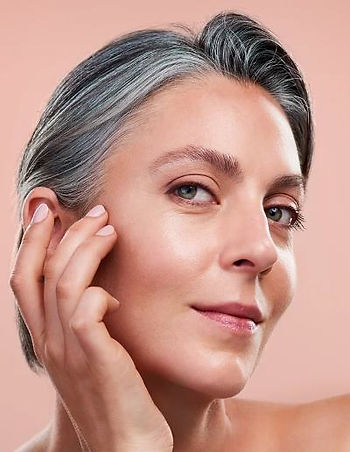
There is often a point when people notice that their skin has started to behave differently.
It may not be one dramatic change.
The jawline looks slightly softer. Fine lines stay visible for longer. The cheeks feel less firm. Skin around the eyes or neck becomes more crepey. Makeup no longer sits quite the way it used to.
Sometimes the description is simply:
“I look tired, even when I’m not.”
We tend to group all of this together under the word ageing, but that does not explain very much.
Skin firmness depends on a complex support system involving collagen, elastin, hydration, the extracellular matrix and the deeper facial structures beneath the skin. Over time, each of these can change.
That is why skin laxity should not automatically lead to one question:
“What is the strongest skin-tightening treatment?”
A more useful question is:
“What has actually changed, and which part of that change can realistically be improved?”
At NovaLx Aesthetics in Brierley Hill, this is how we approach conversations around skin firmness, collagen and natural ageing. Clients visit us from Stourbridge, Hagley, Kinver, Birmingham and across the wider West Midlands, often not because they want a different face, but because they want their skin to look healthier, firmer and better supported.
What gives skin its firmness?
Much of the skin's structural support sits within the dermis, beneath the outer epidermal layer.
Collagen provides strength.
Elastin contributes to the skin's ability to stretch and recoil.
The extracellular matrix provides a complex environment around these structures, helping maintain tissue organisation, hydration and cellular function.
When we are younger, this structural network tends to be more abundant and organised.
With time, collagen production becomes less efficient and existing collagen becomes increasingly fragmented. The result is not simply “more wrinkles”.
We may begin to notice:
reduced firmness;
fine lines;
crepey texture;
enlarged pores;
less elasticity;
softer facial contours;
changes around the neck and décolletage;
existing acne scars appearing more visible.
This is why skin quality is a more useful concept than simply “anti-ageing”.
A wrinkle is one visible sign.
The underlying changes are much broader.
Why does collagen change with age?
Collagen is not a permanent structure sitting unchanged beneath the skin.
The body is continually producing, organising and breaking it down.
With intrinsic ageing, that balance gradually changes. Fibroblast activity alters, collagen becomes increasingly fragmented and the dermal support structure becomes less efficient.
Then there are external influences.
Repeated ultraviolet exposure contributes to photoageing and collagen degradation. Smoking, chronic inflammation and environmental exposure can also influence how the skin ages.
This explains why two people of exactly the same age can have very different skin.
Chronological age gives us part of the picture.
Skin history often tells us considerably more.
Fine lines, skin laxity and facial ageing are not the same thing
This distinction is important because these concerns require different solutions.
Fine lines
Fine lines are relatively shallow creases within the skin.
They may be influenced by:
repeated facial movement;
UV exposure;
dehydration;
collagen change;
thinning of the skin.
Skin laxity
Skin laxity refers to a reduction in firmness and support.
You may notice:
softer lower-face contours;
early jowling;
crepey skin;
looseness beneath the chin;
reduced elasticity.
Structural ageing
The face also changes beneath the skin.
Fat compartments alter, ligaments change and bone remodels with age.
So what looks like “loose skin” may actually be a combination of skin laxity, volume loss and deeper structural ageing.
This is where realistic treatment planning becomes important.
Improving the quality of the skin cannot replace lost bone.
Restoring volume does not necessarily improve poor skin texture.
And no non-surgical skin treatment reproduces what a surgical lift can achieve.
The first job is to understand which problem we are actually looking at.
Can skincare improve skin firmness?
Good skincare matters enormously.
It can support:
the skin barrier;
hydration;
pigmentation control;
texture;
protection against avoidable photodamage.
Evidence-based ingredients such as retinoids may also support aspects of collagen remodelling and photoaged skin.
But skincare has limits.
A topical product cannot physically reposition significantly descended tissue.
That does not make skincare ineffective.
It means we should ask skincare to do the job it is capable of doing.
I think of good skincare as the foundation of skin longevity.
Professional treatments become useful when we want to stimulate deeper biological changes that topical products cannot achieve alone.
The two approaches should support each other rather than compete.
How can professional skin laxity treatments support collagen and firmness?
This is where the treatment conversation becomes more interesting.
There is no single “collagen treatment”.
Different treatments stimulate the skin in different ways.
A useful way of thinking about them is in three broad groups.
1. Collagen induction as a skin laxity treatment
These treatments create controlled stimulation that encourages a wound-healing and remodelling response.
They include:
traditional microneedling;
RF microneedling;
selected energy-based treatments.
Microneedling creates controlled mechanical micro-injury.
RF microneedling combines needling with radiofrequency energy delivered into the dermis, adding controlled thermal stimulation.
Both can support collagen remodelling, but they are not automatically interchangeable.
Someone with relatively mild textural change may not need the same intervention as someone with acne scarring, pores and early laxity.
More technology is not automatically better treatment.
2. Resurfacing skin laxity treatments
Fractional resurfacing works differently.
CO₂ laser creates microscopic areas of controlled ablative injury, stimulating both surface renewal and deeper remodelling.
This can make it useful where concerns include:
more established fine lines;
significant textural change;
photoageing;
acne scarring;
enlarged pores;
uneven surface quality.
The trade-off is that stronger resurfacing generally involves more recovery and requires more careful consideration of skin type, pigmentation risk and aftercare.
That does not make CO₂ “better” than RF microneedling.
It gives it a different job.
3. Regenerative and biostimulatory injectables as skin laxity treatments
Not every injectable is intended to add obvious volume.
Biostimulators, polynucleotides and other skin-quality treatments are increasingly discussed as part of the regenerative aesthetics conversation.
Some are used primarily to support tissue quality.
Others aim to encourage collagen production.
Others focus more strongly on hydration and skin function.
These treatments can sit within the same long-term skin strategy as microneedling and resurfacing, but they should not simply be stacked together because “combination treatment” sounds sophisticated.
Each treatment should have a clear purpose.
RF microneedling, resurfacing or injectables: how do you decide?
This is the point where treatment mapping becomes more useful than simply comparing machines.
What are we trying to improve? | Treatment direction that may be considered |
Mild texture and early collagen change | Microneedling or other collagen-induction approaches |
Texture with mild laxity or acne scarring | RF microneedling |
More significant surface ageing or scarring | Fractional resurfacing |
Hydration and skin quality | Appropriate injectable skin-quality treatment |
Gradual collagen support | Selected biostimulators |
Significant facial volume loss | Structural injectable assessment may be more relevant |
Advanced tissue descent | Non-surgical skin treatment may have limited benefit |
This is not a prescription.
It is a way of showing why the correct treatment depends on the cause of the concern, rather than which procedure happens to be fashionable.
Where does Secret PRO fit?
NovaLx Skin Clinic uses Cutera Secret PRO, which combines RF microneedling and fractional CO₂ resurfacing within one platform.
That gives us two different approaches to skin remodelling.
RF microneedling allows controlled stimulation within the dermis.
Fractional CO₂ allows more significant resurfacing where that is appropriate.
The benefit is not simply having two technologies.
The benefit is being able to choose between them.
Someone may have early laxity and enlarged pores.
Another person may have established fine lines and significant texture.
Someone else may have acne scarring but also a history of pigmentation.
Technology gives us options.
Assessment tells us which option makes sense.
That distinction matters more than the name on the machine.
Who may benefit from a collagen-remodelling approach?
A collagen-led treatment plan may be worth discussing where concerns include:
early or moderate loss of firmness;
fine lines;
crepey skin;
enlarged pores;
uneven texture;
acne scarring;
reduced elasticity;
changes in skin quality with age.
These treatments often appeal to people who want improvement without dramatically changing their facial shape.
That is an important distinction.
If the concern is genuinely skin quality, adding facial volume may not solve it.
If there is significant structural volume loss, repeatedly treating the skin may not solve that either.
And if laxity has become advanced, it is important to be realistic about what non-surgical treatment can achieve.
Sometimes recognising a treatment's limitations is as valuable as recognising its benefits.
Who needs extra caution?
No collagen-stimulating treatment is automatically suitable for every skin.
Treatment may need to be postponed, modified or avoided where there is:
active infection;
significant inflammatory skin disease;
uncontrolled acne;
impaired wound healing;
certain medications or medical conditions;
pregnancy;
a history of problematic scarring;
recent tanning;
significant pigmentation risk;
a compromised skin barrier.
Skin type matters particularly when resurfacing is being considered.
Previous post-inflammatory pigmentation, melasma and Fitzpatrick skin type should all influence treatment selection.
Again, the strongest treatment is not automatically the most appropriate treatment.
What should you expect from collagen stimulation?
Collagen remodelling is gradual.
That sounds obvious, but it is one of the most important things to understand before treatment.
Some procedures may create an early improvement in the way the skin looks because of temporary swelling or hydration.
That is not the final result.
Deeper remodelling happens over subsequent weeks and months.
Changes may include gradual improvement in:
firmness;
skin texture;
pore appearance;
fine lines;
overall skin quality.
The original draft makes this point particularly well: treatment is completed in the clinic, but the biological response continues afterwards.
This is why collagen treatments should not be judged the following morning.
They require patience.
How many treatments do you need?
There is no useful universal answer.
The number and intensity of treatments depend on:
the degree of skin change;
age and skin thickness;
scar burden;
treatment chosen;
previous procedures;
pigmentation risk;
tolerance for downtime;
the result being sought.
Some people may benefit from a course.
Others may need one more intensive treatment followed by maintenance.
The important point is that the treatment plan should follow the indication.
We should not decide that everyone needs three sessions simply because three sessions make a convenient package.
Why skin changes can become more noticeable in the 40s and 50s
For many women, the skin changes described above become more noticeable around perimenopause and menopause.
This is not simply another birthday.
Hormonal change can affect skin hydration, thickness, elasticity and collagen support. In practical terms, women may begin to notice:
increased dryness;
crepey texture;
reduced firmness;
softening around the jawline;
more visible fine lines;
slower recovery;
neck changes.
The original article correctly identified that for many women the issue is not suddenly needing “more filler”; it may be that the quality and structural support of the skin itself has changed.
This is where the broader idea of skin longevity becomes useful.
Rather than asking how to erase every sign of ageing, we can ask how to support healthier, stronger and more resilient skin as it changes.
Skin tightening or facial lifting: knowing the difference
Perhaps the most important expectation to establish is this:
Improving skin firmness is not the same as repositioning significantly descended tissue.
Non-surgical treatments may improve:
skin quality;
collagen density;
texture;
fine lines;
mild laxity.
They cannot reproduce a surgical facelift.
This matters particularly when discussing jowls and neck laxity.
Sometimes an improvement in skin quality and modest tightening creates exactly the fresher appearance someone wants.
Sometimes the degree of structural ageing means it will not.
The treatment plan should be built around a result that is biologically realistic rather than a result that a machine happens to be marketed as producing.
Why choose NovaLx Aesthetics?
NovaLx Aesthetics is based in Brierley Hill, with clients visiting from Stourbridge, Hagley, Kinver, Birmingham and across the West Midlands.
Our approach to ageing skin is not based around chasing every line.
We are more interested in understanding:
what has changed;
whether the issue sits primarily in the skin or deeper facial structures;
what can realistically be improved;
how much intervention is appropriate;
and how treatment fits into longer-term skin health.
Secret PRO gives us access to RF microneedling and fractional CO₂ resurfacing, but having both technologies does not mean everyone needs either of them.
Another client may need simpler microneedling.
Another may need skincare first.
Another may eventually benefit from a regenerative injectable.
And someone with advanced laxity may need an entirely different conversation.
The objective is not to make the face look artificially tight.
It is to help the skin look firmer, smoother, healthier and better supported while still looking like itself.
Final thoughts
Skin does not suddenly become old.
It changes gradually.
Collagen changes. Elasticity changes. Hormones influence the skin. Sun exposure accumulates. Facial structures evolve underneath it.
Once we understand this, the treatment conversation becomes more intelligent.
Instead of asking:
“What is the best anti-ageing treatment?”
we can ask:
“What has actually changed in my skin, and which part of that change can we realistically improve?”
Sometimes the answer is skincare.
Sometimes it is collagen induction.
Sometimes it is resurfacing.
Sometimes an injectable has a clear role.
And sometimes the degree of structural ageing sits beyond what a non-surgical skin treatment should promise to correct.
That is not a weakness of modern aesthetics.
It is what makes a thoughtful approach to ageing skin credible.
FAQs
Why does facial skin lose firmness with age?
Collagen, elastin, hydration and deeper facial structures all change over time. Collagen production becomes less efficient, existing collagen becomes more fragmented and the tissues beneath the skin also evolve. UV exposure and other environmental factors can accelerate these changes. This is why skin may gradually look softer, thinner or less resilient even when someone has taken good care of it.
Can loose facial skin be tightened without surgery?
Mild skin laxity may improve with treatments designed to stimulate collagen and remodel the dermis, including RF microneedling and selected resurfacing procedures. However, non-surgical treatments cannot reposition significantly descended tissue or reproduce a facelift. The degree of laxity, facial structure and expected result should therefore be assessed before choosing treatment.
Does RF microneedling actually tighten skin?
RF microneedling combines controlled needling with radiofrequency energy delivered into the dermis. This can stimulate a wound-healing and collagen-remodelling response, which may gradually improve firmness, texture and mild laxity in appropriately selected skin. Results should be understood as improvement in skin quality and support rather than a surgical lifting effect.
What is the difference between RF microneedling and CO₂ laser?
RF microneedling primarily delivers controlled thermal stimulation within the dermis, while fractional CO₂ laser combines surface resurfacing with deeper collagen remodelling. RF may be particularly useful where texture, scars and mild laxity overlap. CO₂ can be useful where more established surface ageing, fine lines or scarring require stronger resurfacing. Recovery and pigmentation considerations also differ.
Can skincare rebuild collagen?
Good skincare can support collagen-related pathways and protect against avoidable collagen damage, particularly through appropriate sun protection and evidence-based ingredients such as retinoids. Skincare can also improve hydration, texture and barrier health. What it cannot do is physically reposition significantly lax tissue, so professional treatment may become relevant when structural skin changes are more established.
Why does skin often change during menopause?
Hormonal changes around perimenopause and menopause can affect collagen, hydration, elasticity and skin thickness. Some women notice increased dryness, fine lines, crepey texture or reduced firmness relatively quickly during this period. This does not mean every woman needs an aesthetic procedure, but it can explain why an existing skincare routine suddenly seems to be doing less.
How long do collagen-stimulating treatments take to work?
Collagen remodelling is gradual. An early glow or temporary swelling should not be confused with the final result. Depending on the treatment, meaningful changes in firmness, texture or skin quality generally develop over subsequent weeks and months. This is why consistent photography and sensible review intervals are more useful than judging the treatment immediately afterwards.
How do I know which skin-tightening treatment is right for me?
Treatment should be based on what is actually causing the concern. Mild texture, early laxity, significant resurfacing needs, volume loss and advanced tissue descent are different problems. A good consultation should assess skin quality, facial structure, medical history, pigmentation risk, downtime and expectations before recommending microneedling, RF, resurfacing, injectable treatment or no procedure at all.



Comments