
What Acne Leaves Behind: The Difference Between Dark Marks and True Scars


Special Offers
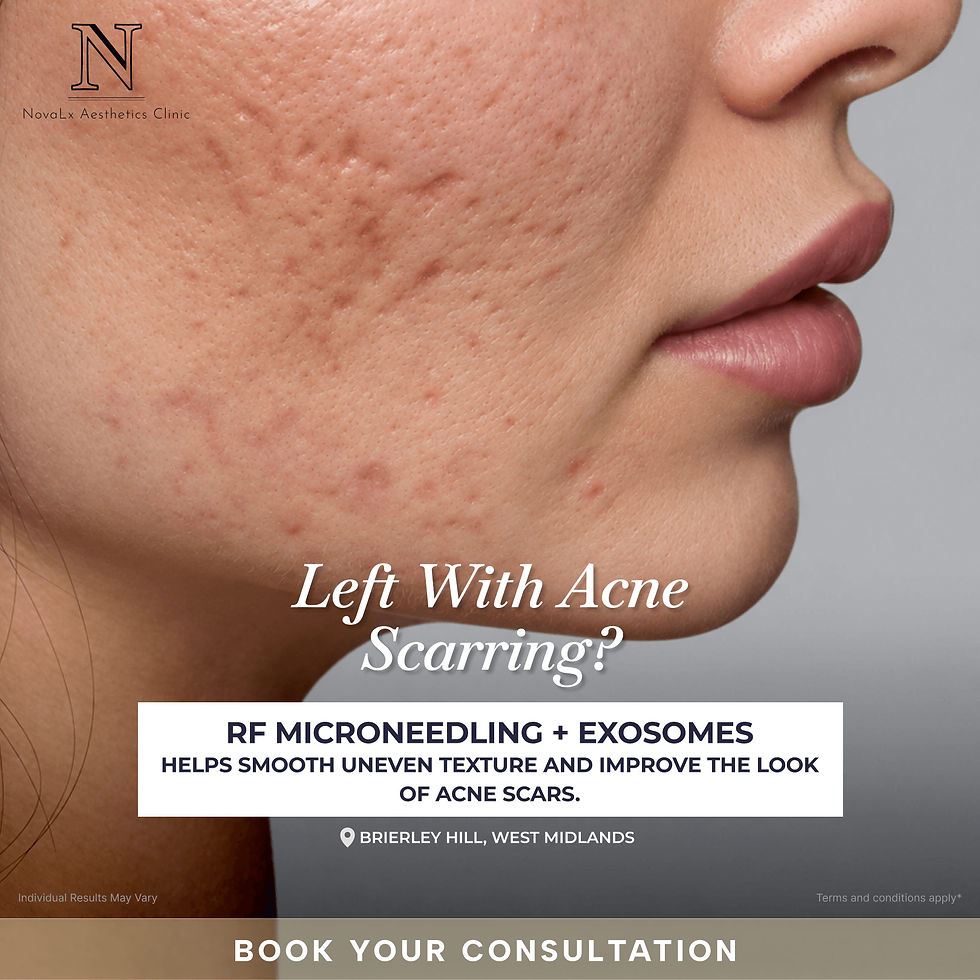

Have you ever noticed that your acne has finally cleared, but your skin still doesn't look quite the same?
Perhaps the breakouts have stopped, yet small depressions remain across your cheeks. Or you are left with dark marks that seem to take months to disappear.
Sometimes the skin looks relatively smooth in the mirror, but under certain lighting, every little indentation becomes visible.
It is tempting to describe all these changes as acne scars.
But they are not necessarily the same thing.
One of the most important distinctions in acne scar treatment is the difference between a change in skin colour and a change in skin structure.
A dark mark may be the result of inflammation affecting pigment production. A depressed scar, however, represents a change in the collagen framework of the skin itself.
Both can follow acne. Both can affect how the skin looks and feels.
But they behave differently, heal differently and require different approaches to treatment.
Understanding that distinction is the starting point for improving skin texture without repeatedly treating the wrong problem.
What actually happens to the skin after acne?
Acne is an inflammatory condition involving the hair follicle and its associated sebaceous gland.
When a follicle becomes blocked, sebum and skin cells accumulate. Changes in the follicular environment can trigger inflammation, sometimes extending into the surrounding tissue.
Most acne lesions heal without leaving a permanent scar.
However, deeper or prolonged inflammation can damage the skin's supporting structures.
The body responds by initiating a repair process.
New collagen is produced to help restore the damaged tissue, but that repair does not always recreate the original architecture of the skin.
Sometimes too little supporting tissue is restored, leaving a depression.
Sometimes excessive collagen forms, producing a raised scar.
And sometimes the structure heals normally, but the inflammatory process leaves behind a change in colour.
This explains why two people with similar acne histories can have very different skin after their breakouts have resolved.
The difference lies partly in how their skin responds to inflammation and repairs the damage.
Acne marks and acne scars are not the same thing
This is where much of the confusion begins.
A client may describe a collection of brown marks across the cheeks as acne scarring. Another may have relatively even skin colour but numerous small indentations.
Both are concerned about the aftermath of acne, but the underlying changes are different.
Post-inflammatory hyperpigmentation: when inflammation leaves colour behind
Post-inflammatory hyperpigmentation, commonly called PIH, develops when inflammation stimulates excess melanin production.
After the original acne lesion disappears, a flat brown, dark brown or sometimes greyish mark remains.
PIH is particularly common and often more persistent in darker skin tones, although it can affect anyone.
The important distinction is that the skin's surface may remain structurally intact.
There is colour, but no true depression.
These marks may gradually fade, although some persist for many months or longer.
Treatment therefore focuses on controlling further inflammation, protecting the skin from ultraviolet and visible light where relevant, and using appropriate pigment-regulating ingredients.
Post-inflammatory erythema: when redness remains
Some people are left with pink, red or purplish marks after acne.
These are often associated with persistent vascular changes following inflammation and are commonly described as post-inflammatory erythema.
Unlike PIH, the visible colour is not primarily caused by excess melanin.
This matters because treatments directed at pigmentation may not address persistent redness in the same way.
True acne scars: when the skin's architecture changes
A true acne scar involves a structural alteration in the skin.
This may appear as a depression, an uneven contour or, less commonly, a raised area of scar tissue.
Unlike a flat pigment mark, an established structural scar will not usually disappear simply because the surrounding skin becomes brighter.
This is why brightening facials and exfoliating products can improve the appearance of post-acne marks without substantially changing deeper acne scars.
The two concerns need to be assessed separately.
Why do acne scars create shadows?
Skin texture is closely connected to the way light falls across the face. A smooth surface reflects light relatively evenly.
When the skin contains small depressions, raised edges or uneven contours, light interacts with those changes. Some areas catch the light while others fall into shadow.
This is why acne scarring can appear much more pronounced in photographs taken with strong side lighting.
It also explains why improving skin hydration or brightness may make the complexion look healthier without completely removing the visible texture.
The issue is not always the colour of the skin. Sometimes it is the shape of the surface reflecting the light.
That distinction becomes particularly important when deciding which treatment is likely to make a meaningful difference.
Not all acne scars have the same structure
Dermatologists commonly classify depressed, or atrophic, acne scars into three main categories.
These categories help explain why one treatment cannot reliably correct every type of scarring.
Ice-pick scars: small openings with considerable depth
Ice-pick scars are narrow, deep depressions that extend vertically into the skin.
They often resemble tiny punctures. Although their surface opening may be small, the underlying scar can extend considerably deeper.
This makes them challenging to treat with procedures that primarily improve the skin's surface.
Boxcar scars: defined edges and a depressed centre
Boxcar scars are wider depressions with relatively distinct edges. They may be shallow or deep. Shallower boxcar scars can sometimes respond to collagen-remodelling and resurfacing treatments.
Deeper scars may require more targeted approaches.
Rolling scars: when the skin is pulled down from beneath
Rolling scars create broader, gently undulating depressions. Their appearance is often influenced by fibrous tissue connecting the skin to deeper structures.
These attachments can pull the surface downwards, creating a tethered appearance.
This is particularly important because stimulating collagen at the surface may not adequately release the underlying attachment.
A rolling scar may therefore require treatment directed at the tethering itself.
Raised scars
Some acne scars develop through excessive collagen formation rather than tissue loss.
These include hypertrophic and keloid scars.
They require a different assessment and should not automatically be treated with the resurfacing methods used for depressed scars.
Why scar classification matters before treatment
Imagine two clients with acne scarring across their cheeks.
The first has numerous shallow boxcar scars and generally uneven texture.
The second has several deep, tethered rolling scars.
Both may be offered microneedling or laser resurfacing because these treatments stimulate collagen. However, their likely responses may differ.
The first client may experience useful improvements in overall texture as collagen remodelling develops. The second may obtain some improvement in skin quality while the deeper tethered scars remain visible.
The difference is not necessarily the quality of the treatment. It is the structure of the scar.
This is why effective acne scar treatment begins by identifying what needs to change within the skin.
Which treatments are appropriate for different types of acne scarring?
Once the scars have been assessed, treatment can be organised according to the problem being addressed.
1. Pigment-regulating treatments for flat acne marks
Where the primary concern is post-inflammatory hyperpigmentation, treatment may involve:
daily broad-spectrum sun protection;
ingredients such as azelaic acid or appropriately selected retinoids;
careful management of active acne;
selected superficial chemical peels;
treatment of any continuing irritation or inflammation.
These approaches aim to improve pigmentation and prevent new marks. They cannot be expected to correct deep structural depressions.
2. Collagen induction for shallow scars and uneven texture
Microneedling creates controlled micro-injuries that stimulate the skin's repair response.
This encourages collagen remodelling over time. It may be useful for certain shallow atrophic scars and more general textural irregularities.
However, the response depends on scar depth and structure.
A deep ice-pick scar or strongly tethered rolling scar is unlikely to respond in the same way as a shallow boxcar scar. Microneedling is therefore better understood as one possible component of scar management rather than a universal solution.
3. RF microneedling and fractional resurfacing for selected structural scars
Radiofrequency microneedling combines controlled needle penetration with radiofrequency energy.
Fractional CO₂ laser resurfacing uses a different mechanism, creating microscopic zones of controlled tissue injury that encourage resurfacing and collagen remodelling.
Both may improve selected atrophic acne scars.
At NovaLx Skin Clinic, Cutera Secret PRO provides RF microneedling and fractional CO₂ resurfacing options.
However, treatment intensity must be selected according to scar characteristics, skin type, healing capacity and pigmentation risk.
Stronger treatment does not automatically mean better treatment.
RF microneedling carries risks including burns, scarring and unwanted fat loss. Fractional CO₂ resurfacing may involve longer recovery, persistent redness and pigmentary complications.
Neither should be regarded as suitable for every client.
4. Scar-specific procedures when deeper structures need correction
Some scars require more than general collagen stimulation.
Tethered rolling scars may benefit from specialist procedures such as subcision, which releases fibrous attachments beneath the skin.
Deep ice-pick scars may require techniques such as focal chemical reconstruction or punch procedures.
Selected depressed scars may also benefit from carefully planned filler treatment.
These are specialist medical procedures requiring appropriate qualifications, anatomical knowledge and risk assessment.
They are not interchangeable with conventional facials or routine microneedling.
The important point is that some scars need their structure corrected before resurfacing can provide the desired improvement.
Why skin tone changes the treatment decision
Acne scarring needs particularly careful assessment in skin that is prone to post-inflammatory pigmentation. Any procedure that creates inflammation can potentially trigger additional pigment production.
This does not mean darker skin cannot benefit from microneedling, RF microneedling or laser resurfacing. It means treatment selection and technique become especially important.
A client with Fitzpatrick IV or V skin may have both structural acne scars and persistent pigmentation. An aggressive procedure that improves texture but produces significant new pigmentation may leave the overall complexion looking worse during recovery.
This is why treatment planning needs to consider the entire skin response rather than the scar alone.
In some cases, preparing the skin, stabilising pigmentation and using a more conservative approach may be preferable.
Should active acne be treated before acne scars?
In most cases, active inflammatory acne should be brought under reasonable control before undertaking elective scar-remodelling procedures. Otherwise, new lesions may continue damaging the skin while existing scars are being treated.
There is also the question of irritation, infection risk and how well inflamed skin will tolerate a procedure. However, this does not mean people with scarring should delay medical assessment until every breakout has disappeared.
Early acne treatment is important because preventing new scars is generally easier than correcting established ones. Where acne is severe, painful, nodular or already causing scarring, medical management should take priority.
How long does acne scar treatment take to work?
Acne scar improvement is usually gradual.
Collagen remodelling occurs over weeks and months, rather than immediately after treatment. The skin may initially appear smoother because of temporary swelling, but this should not be confused with the final result.
A realistic treatment plan may involve several sessions, healing intervals and reassessment.
Concern | General treatment direction | Expected pattern |
Flat dark acne marks | Pigment control and sun protection | Gradual fading over months |
Persistent post-acne redness | Inflammation management and selected vascular treatments | Variable improvement over weeks to months |
Shallow atrophic scars | Microneedling or selected resurfacing | Gradual texture improvement |
Mixed or more pronounced atrophic scars | Individualised RF microneedling or fractional resurfacing | Improvement over several months |
Tethered rolling scars | Specialist structural assessment | Depends on scar release and subsequent remodelling |
Deep ice-pick scars | Targeted specialist procedures | Variable improvement, often requiring staged treatment |
These are broad patterns, not guaranteed results.
Complete scar removal is uncommon, and some scars remain visible despite appropriate treatment. For many clients, the realistic objective is to soften the appearance of scarring, improve texture and reduce the contrast between scarred and surrounding skin.
Why acne scars may become more noticeable with age
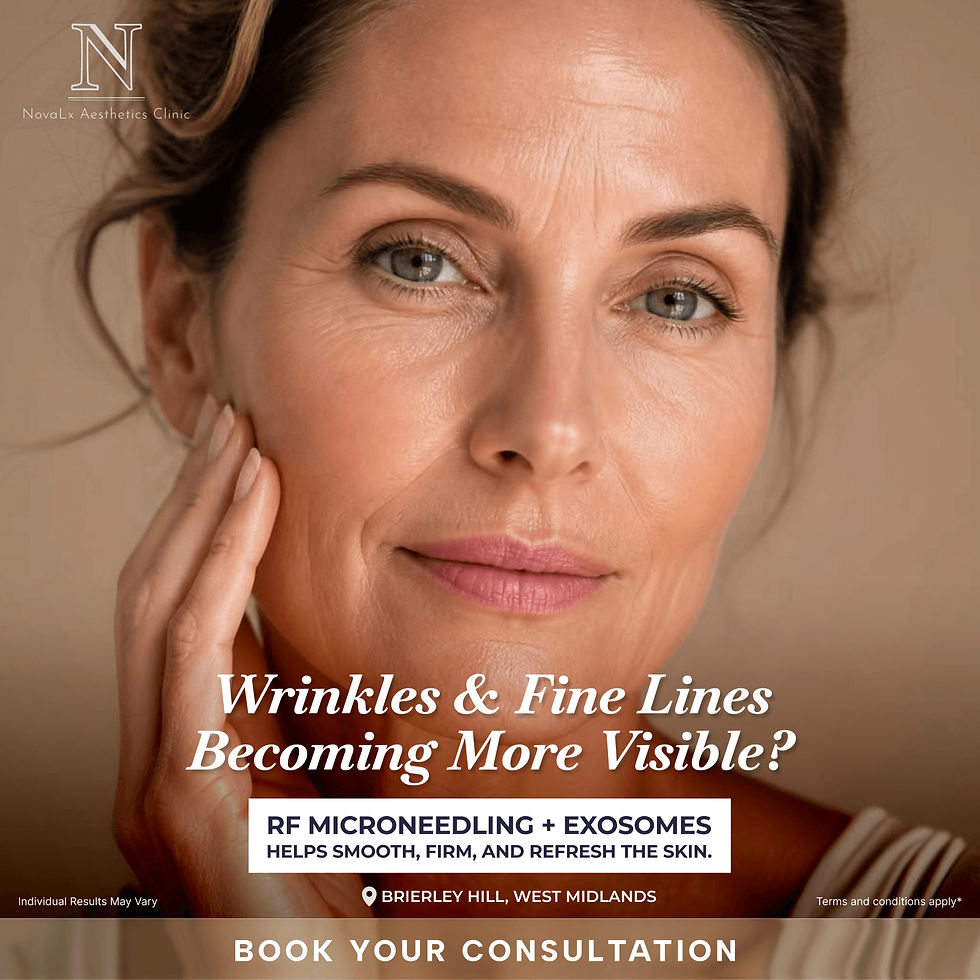
Some people find that acne scars become more visible in their forties and fifties, even though they have not experienced acne for many years. This can happen because the surrounding skin is changing.
As collagen support and skin elasticity decline, existing textural irregularities may become more apparent. Changes in facial volume and the way light falls across the cheeks can also influence the appearance of established scars.
This does not necessarily mean the scars themselves have become deeper.
It may mean the surrounding skin no longer provides the same visual support.
For women experiencing perimenopausal or menopausal skin changes, this distinction can be useful.
Improving general skin quality may help the complexion look more even, but deeper scar correction may still require a separate approach.
What should an acne scar consultation assess?
A useful consultation should establish whether the concern is primarily pigmentation, redness, structural scarring or a combination. It should also consider the type, depth and distribution of the scars.
Other important factors include active acne, skin tone, pigmentation risk, previous procedures, medication history, healing problems and any tendency towards keloid formation.
A history of isotretinoin treatment also needs to be discussed. Decisions about procedure timing should be individualised rather than based on a blanket rule.
Where scars are deep, tethered, raised or extensive, specialist dermatological assessment may be the most appropriate next step.
The consultation should also establish what the client actually hopes to achieve.
Is the priority smoother makeup application?
Less visible scarring in photographs?
Improved skin texture?
Or correction of several deep depressions?
These are different objectives, and the likely benefits and limitations should be discussed before treatment begins.
Why choose NovaLx Aesthetics?
At NovaLx Aesthetics in Brierley Hill, our approach to acne scarring begins with understanding what the skin has been left with.
A dark mark, a shallow depression and a tethered scar are not the same concern.
Our treatment philosophy focuses on skin quality, collagen health and carefully planned improvement rather than selecting a procedure simply because it is available.
For clients visiting from Dudley, Stourbridge and surrounding areas of the West Midlands, the aim is to create a realistic treatment strategy that reflects the skin's condition, its healing capacity and the changes that can reasonably be achieved.
Sometimes collagen stimulation is appropriate.
Sometimes pigmentation needs attention first. And sometimes specialist medical treatment is a better option. The value of a personalised plan lies in knowing the difference.
Final thoughts: the skin remembers inflammation differently
Return to the skin after the acne has disappeared.
A brown mark may gradually fade as excess pigment clears.
A shallow depression may improve as collagen is remodelled.
A deep, tethered scar may require an entirely different intervention.
All three began with acne. But they are not the same problem.
This is why the question should not simply be:
What is the best treatment for acne scars?
A more useful question is:
What has acne actually left behind in my skin, and what would need to change for it to look different?
Understanding that distinction can prevent unnecessary treatment, unrealistic expectations and repeated attempts to correct a problem with the wrong approach.
Because improving acne scarring is not simply about making the skin smoother.
It is about understanding how the skin healed, where its structure changed and which improvements are genuinely possible.
Frequently Asked Questions
Can acne scars disappear completely?
Established structural acne scars rarely disappear completely without intervention, and even professional treatment cannot guarantee their removal. Certain treatments may significantly soften the appearance of selected scars, but results depend on their type, depth and severity. Flat post-acne pigmentation is different because it may gradually fade without leaving a permanent structural change.
What is the difference between acne scars and dark spots?
Dark spots following acne are often caused by post-inflammatory hyperpigmentation. They are usually flat and result from excess pigment production after inflammation. True acne scars involve a structural change in the skin, such as a depression or raised area. Pigmentation treatments may improve dark marks but cannot reliably correct deeper structural scars.
What is the best treatment for pitted acne scars?
The best treatment depends on the type of pitted scar. Shallow boxcar scars may respond to microneedling or resurfacing, while tethered rolling scars may require subcision. Deep ice-pick scars often need targeted specialist procedures. Many people have several scar types, so a combination approach may be more appropriate than one treatment applied across the entire face.
Is RF microneedling better than CO₂ laser for acne scars?
Neither treatment is universally better. RF microneedling and fractional CO₂ laser work through different mechanisms and have different recovery profiles. Both may improve selected atrophic scars, but their effectiveness depends on scar structure, treatment technique and skin characteristics. Fractional CO₂ may involve greater downtime and pigmentation risk, while RF microneedling has its own potential complications, including unwanted tissue injury.
Can chemical peels remove acne scars?
Superficial chemical peels may improve post-acne pigmentation, congestion and some surface irregularities. However, they are unlikely to correct deep structural acne scars. Certain specialist chemical reconstruction techniques can be used for selected deep scars, but these differ considerably from conventional facial peels and require appropriately qualified practitioners.
Is acne scar treatment safe for darker skin?
Several acne scar treatments can be used successfully in darker skin, but careful assessment is essential. Post-inflammatory hyperpigmentation is an important consideration, particularly with aggressive resurfacing. Treatment selection should reflect skin tone, pigmentation history, scar type and individual healing response. No procedure should be described as risk-free for all Fitzpatrick skin types.
How many sessions are needed for acne scar treatment?
The number of sessions depends on scar type, severity and the chosen procedure. Collagen-remodelling treatments commonly require a course of sessions, with improvements developing gradually over subsequent months. Deep or mixed scarring may require different procedures at different stages. A realistic plan should include reassessment rather than promising a fixed result after a predetermined number of treatments.
Should acne be completely clear before treating acne scars?
Active inflammatory acne should generally be adequately controlled before elective scar-remodelling procedures. This helps reduce the risk of further scarring and allows treatment to focus on established damage. However, people who are already developing scars should seek medical advice promptly. Early treatment of active acne remains an important part of preventing additional permanent scarring.


Comments